
“A corporate badge is a rented identity. Your technical mastery is permanent equity.”
When the news broke across Bengaluru, Hyderabad, and Pune about corporate restructuring at tech giants like Oracle, the immediate reaction was a mix of shock and anxiety. One morning you’re pushing code, managing cloud infrastructure, or leading product strategy; by afternoon, your access is revoked, Slack goes dark, and a severance email arrives.
It is completely normal to feel disoriented. But once the dust settles, a glaring truth emerges: In the tech world, a layoff isn’t a failure—it’s an unexpected unlock.
Some of the most successful founders, principal consultants, and high-earning independent engineers started their journey with a sudden corporate exit. When you are forced out of the comfort zone of a fixed paycheck, you gain something far more valuable: complete ownership of your career trajectory.
Here is how to transform this moment into your greatest professional upgrade.
Step 1: The First 72 Hours — Regain Control Immediately
When corporate ground shifts under your feet, your immediate focus should be stability, posture, and clarity.
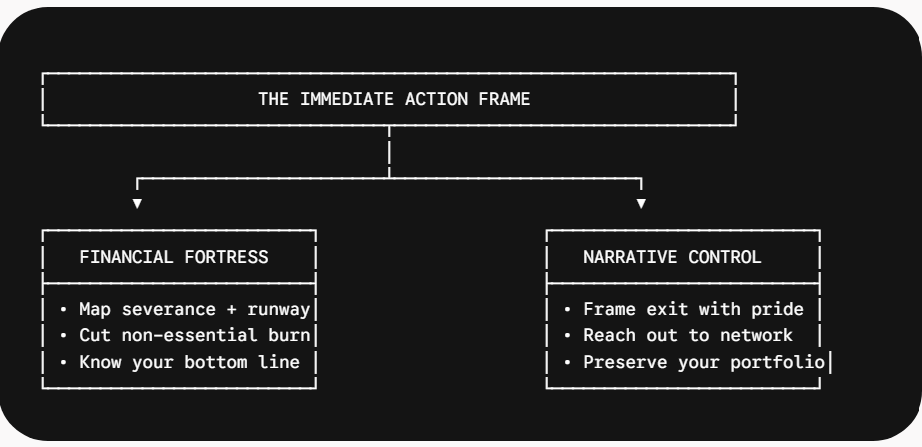
- Calculate Your Real Runway: Combine your severance pay, notice period compensation, and liquid savings. Divide that by your minimum monthly burn rate. Knowing you have 6 to 12 months of runway eliminates panic and prevents you from accepting the first lowball offer that comes along.
- Own the Narrative: You were not “let go because of performance.” You were caught in a global corporate portfolio reallocation. When speaking to recruiters or ex-colleagues, be concise and confident: “I was impacted by a broad restructuring, which gives me a clean runway to take on my next major challenge.”
- Secure Your Relationships: Reach out to teammates, engineering managers, and cross-functional leads while memories are fresh. Request recommendations on LinkedIn and stay connected via personal channels. Your peer network will be your fastest source of high-quality referrals.
Step 2: Stop Depending on a Single Paycheck
Relying on a single employer for 100% of your livelihood is like building a critical system with a single point of failure. Modern tech careers are shifting toward income diversification.
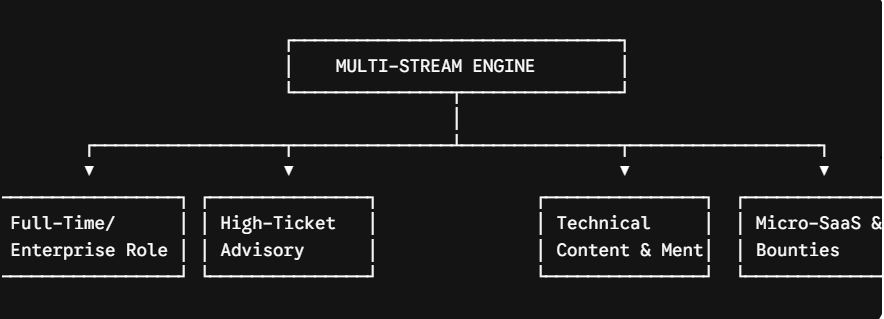
1. High-Ticket Enterprise Consulting
Mid-market companies and growing startups frequently encounter database bottlenecks, cloud cost overruns, or architecture scaling issues. They desperately need senior talent, but they cannot afford a ₹50L+ full-time salary.
- The Strategy: Offer fixed-scope architecture audits or performance optimization packages.
- The Pitch: “We will review your cloud architecture/database queries in 2 weeks and cut your monthly infrastructure bill by 20–30%.” This creates immediate ROI for the client.
2. Fractional Technical Leadership
Early-stage startups often have non-technical founders or junior teams who need strategic guidance without full-time overhead.
- The Strategy: Act as a Fractional CTO or Lead Architect for 10–15 hours a week per client.
- The Math: Balancing 2 or 3 fractional clients can net equal or higher revenue than a single corporate salary while giving you flexible control over your schedule.
3. Developer Tools & Micro-SaaS
Having built enterprise systems, you know where developer friction lives.
- The Strategy: Build focused CLI utilities, internal automation scripts, or developer plugins.
- Monetization: Charge monthly subscriptions for API access, set up GitHub Sponsors, or launch lightweight SaaS tools targeting specific developer workflows.
4. Knowledge Monetization & Advisory
- 1-on-1 Mentorship: Offer system design mock interviews, career guidance, or resume reviews on platforms like Topmate or MentorColor.
- Cohort-Based Courses: Package your deep technical domain knowledge (e.g., Database Tuning at Scale, Cloud Security Best Practices) into cohort courses or technical guides.
Step 3: Your 30-Day Recovery Roadmap
| Timeline | Primary Objective | Key Action Item |
| Days 1–3 | Stabilization | Review exit documents, establish financial runway, gather portfolio metrics. |
| Week 1 | Rebranding | Revamp LinkedIn profile to highlight Core Expertise over Job Title. Reach out to 10 alumni or ex-colleagues. |
| Week 2 | Visibility | Publish a deep-dive technical post or case study showcasing how you solve complex enterprise problems. |
| Week 3 | Pipeline Creation | Apply for targeted roles while pitching fractional or advisory roles to 3 mid-sized companies. |
| Week 4 | Execution & Choice | Evaluate incoming job offers, consulting retainers, or hybrid arrangements. |
The Bottom Line
A severance package is not a setback—it is paid runway to decide what kind of career you want to build next. The Indian tech ecosystem values real engineering capability above corporate titles.
Take a breath, back your abilities, and turn this exit into your biggest career breakthrough.
Share This Blueprint
Know an ex-colleague, friend, or teammate navigating a layoff? Pass this article along to help them take back control of their trajectory.

Leave a Reply